Bad Blintz Watch
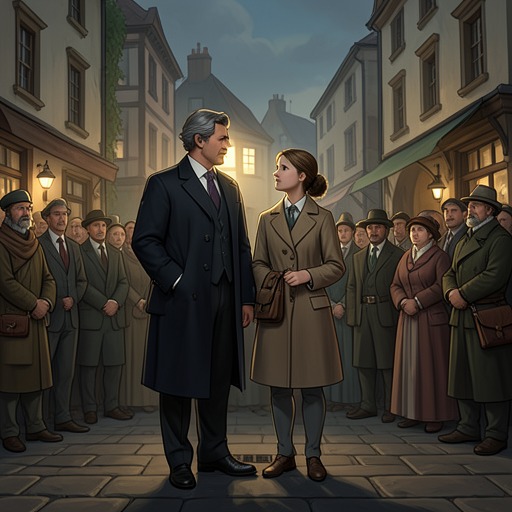
The Amazing Maurice and His Educated RodentsBad Blintz Watch is the town’s official policing body, represented here by Sergeant Doppelpunkt. Its significance changes as Bad Blintz confronts the rats’ capacity to act together: the Watch is not only a witness to the new danger but also a participant in imagining a shared civic order, including the prospect of rat officers with authority to arrest humans.
Identity and Presence
At dawn, Sergeant Doppelpunkt wakes in the tiny Watch office by the main gates. The narration identifies him as one half of the city’s official Watch and, with comic emphasis, its largest half. The scene gives the organization a modest physical presence: its representative is alone in a cramped office when the town’s hidden conflict suddenly enters his workday. A large grey rat bursts out of the office sink’s plughole and runs up the sergeant’s arm before leaping to the floor. Three smaller rats follow through the pipe, attack it together, and drag its body into an old rat hole in the wall. The sergeant watches, astonished. The incident places the Watch at the threshold between the human town and the rats’ underground world, and shows that coordinated violence is already unfolding beneath the streets.
From Rat Problem to Political Problem
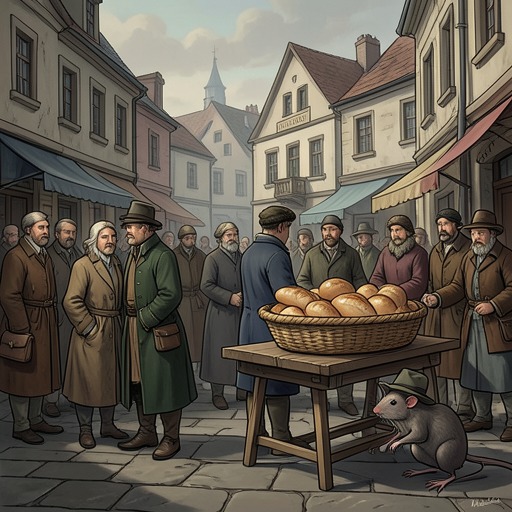
As negotiations become possible, Keith urges the mayor to speak with the rats rather than rely on dogs, brooms, and attempts to drive them away. He warns that the rats live beneath the town’s floorboards and know how to use fire and poison; chasing them off would not make them disappear. Darktan presents negotiation as an opportunity rather than a threat. These exchanges establish the conditions in which the Watch’s role must be reconsidered: the rats are a community with the means to defend themselves, not a nuisance that can simply be removed by force. The proposed settlement is treated as practical government, not a momentary gesture of goodwill. The Town Council of Bad Blintz and senior rats take part in a committee to work through the details, because a long-running conflict cannot be ended by a handshake alone. The Watch enters this discussion as an institution whose laws and procedures will have to accommodate a new kind of member.
The Watchrat Proposal
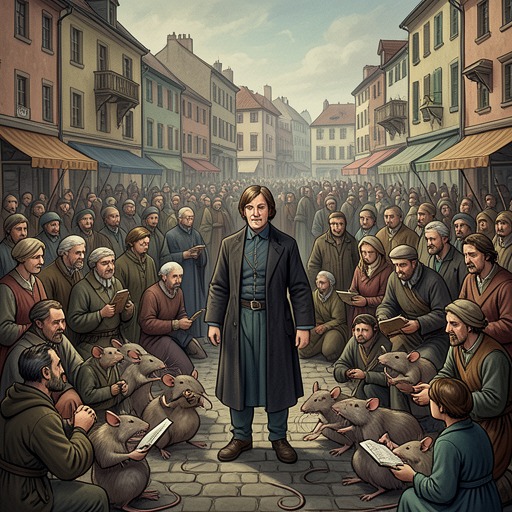
Maurice proposes that rats serve as officers in the Watch. Sergeant Doppelpunkt responds that the idea could work, noting that the badges would have to be made smaller. He also accepts the consequence of the proposal: if a rat is properly sworn in as a watchman—a watchrat—then it cannot be barred from arresting someone merely because that person is larger. He points out that a rat could run up a person’s trouser leg, a practical advantage that briefly threatens to derail the committee’s business into another subcommittee. The exchange makes the change concrete without establishing that the proposed appointments have already been carried out. Rat officers would not merely assist the existing Watch; as sworn-in members, they could exercise authority over humans as well as rats. Sergeant Doppelpunkt’s willingness to consider that implication gives the proposal institutional weight, while the discussion of smaller badges shows how an abstract principle of inclusion quickly becomes a matter of ordinary administration.
Significance
The Watch’s role reflects the larger change in Bad Blintz: public order can no longer rest on humans treating rats as creatures to be hunted or driven away. The sergeant’s dawn encounter shows him the rats’ coordinated action firsthand; the later discussion asks what it would mean to recognize their agency within the town’s institutions. The proposed watchrats therefore mark a shift from managing a rat problem to negotiating shared rules and responsibilities. The evidence leaves the practical details under discussion, but makes clear that the Watch is being imagined as part of a civic order in which size and species alone do not determine who may enforce the law.